
Loitering munitions, often described as 'suicide drones' or 'kamikaze drones', are becoming central to modern warfare because of their ability to hover over target areas, identify threats and strike with high precision.

'We were in a heavily nuclearised environment. China had tested for Pakistan in the 1980s and helped their missile programme stay just one step behind us.'

The triennial exercise will take place for two hours and fifteen minutes during the day, dusk and night, he said.
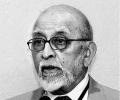
M R Srinivasan focused on the peaceful use of nuclear power at a time when the popular view among the 'hawks' was that India should build a nuclear arsenal as a deterrent.
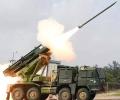
'A crucial role in bolstering the Indian Army's firepower by enabling precise and long-range strikes.'

The Enhanced Pinaka has demonstrated a range of 75 km and an ability to strike within 10 metres of where it is aimed. This allows a Pinaka battery to destroy a terrorist camp, or an enemy post, logistics dump or headquarters, without sending soldiers across the border.
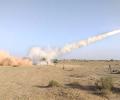
The Defence Research and Development Organisation and the Indian Army successfully flight-tested the Pinaka Mk-I enhanced rocket system and the Pinaka area denial munition rocket systems in Pokharan, Rajasthan.
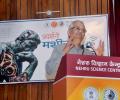
'Why should we disclose classified information to satisfy those who doubt our Hydrogen Bomb capability?'
Although the credit for acquiring the technological skill must be given to India's outstanding nuclear scientists, the decision to go nuclear was a political one that entailed clarity of vision, courage and resolve, points out Rup Narayan Das.
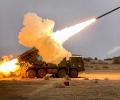
The rocket systems that were tested at Pokharan field firing ranges were manufactured by a private industry following transfer of technology by the Defence Research and Development Organisation.

Joginder Tuteja looks at the top 10 JA productions.

'She showed courage at every turn in her political career.'
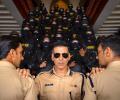
In the second part of this four-part special, Joginder Tuteja lists the new releases of 2021.

Dr Kakodkar's strategic stubbornness ultimately got India what it wanted though the negotiations with the US went to the wire, notes Shivanand Kanavi.

'When economic policies were attacked by people on his own side, he went ahead despite all the criticisms in the coalition, within the party and the Sangh Parivar.'

With the situation in Ladakh tense and no resolution in sight the trigger to take the India-US relationship to a transformational one is already there, observes Lieutenant General Syed Ata Hasnain (retd).

It is impossible for Mumbaikars not to glimpse themselves or someone they know in Sudhir Patwardhan's paintings.

In the BJP veteran's home district, some feel he has been harmed by his party, while some think he never gave back to the place he belonged to, and then there are some who believe son Manvendra Singh will have a tough time living up to his name.

Squadron Leader Samir Abrol's brother Sushant, who brought back his older sibling's coffin draped in the Tricolour, tells Archana Masih why life will never be the same again.

'India must close the missile technology gap with both China and Pakistan as early as possible, or else the credibility of India's nuclear deterrence will remain suspect,' says Brigadier Gurmeet Kanwal (retd).

Were the May 1988 nuclear tests a success? 20 years after Pokharan, a look back at those decisive atomic tests through the eyes of someone who knew.

20 years ago this day, May 11, 1998, India conducted its second nuclear test at Pokharan in Rajasthan. In a fascinating interview on Rediff.com, K Subrahmanyam revealed how Indian PMs reacted to nuclear ambitions.
